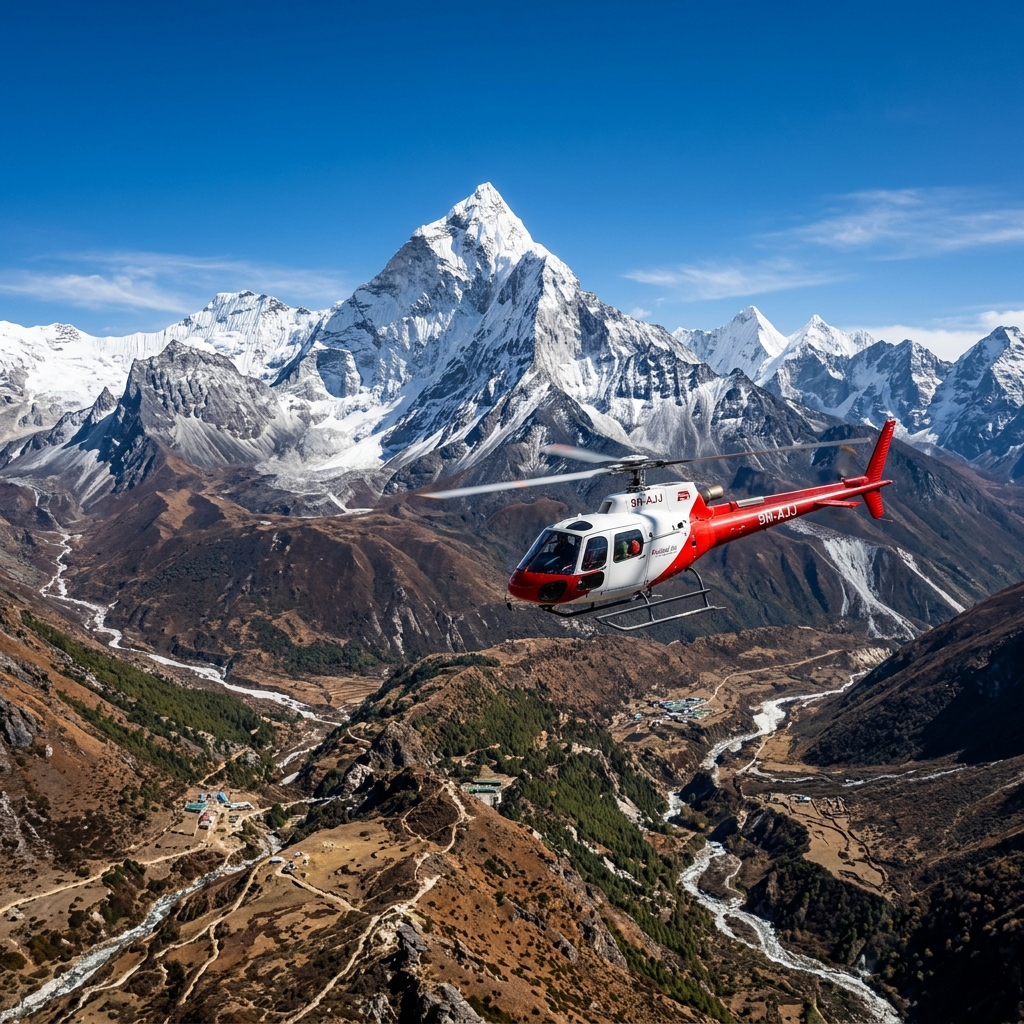
An Everest Base Camp helicopter tour is the absolute ultimate way to experience the majesty of the Himalayas. However, because you are flying into a high-altitude alpine zone (up to 5,644m at Kala Patthar), weather is the single most important factor that determines whether your flight takes off, stays grounded, or experiences delays.
Choosing the right time of year is essential. This guide breaks down the month-by-month weather patterns in the Everest region, details visibility and temperature trends, and explains seasonal reliability so you can pick the perfect flight window.
Quick Recommendation
Autumn (Oct–Nov) is the gold standard for clear skies and stability. Spring (Apr–May) is the second best with rising temperatures and alpine flowers.
Key Weather Factors in the Everest Region
Unlike trekking, which can proceed through minor rain or fog, helicopter flights require strict visibility limits. Pilots need to navigate deep mountain valleys, Lukla's tricky airspace, and clear landing zones. The two main factors to consider are:
- Wind Speeds: Excessive wind at high altitude can prevent landings at Kala Patthar.
- Cloud Cover and Fog: Morning fog in Kathmandu valley or low clouds in the Lukla area are the most common causes of flight delays.
Month-by-Month Weather & Visibility Breakdown
| Month | Avg. Temp (Kala Patthar) | Visibility Level | Flight Success Rate |
|---|---|---|---|
| January | -15°C to -10°C | Excellent (Very Clear) | 80% (Winter delays) |
| February | -12°C to -8°C | Excellent | 85% |
| March | -8°C to -4°C | Good (Some haze) | 90% |
| April | -5°C to 0°C | Excellent | 95% (Highly reliable) |
| May | -2°C to 3°C | Good (Spring afternoon clouds) | 90% |
| June | 0°C to 5°C | Poor (Monsoon starts) | 40% (Not recommended) |
| July – August | 2°C to 7°C | Very Poor (Peak Monsoon) | 20% (High cancellations) |
| September | -3°C to 2°C | Moderate (Post-monsoon clearing) | 75% |
| October | -6°C to -2°C | Outstanding (Crisp & Clear) | 98% (Best month) |
| November | -10°C to -5°C | Outstanding | 98% (Extremely stable) |
| December | -12°C to -7°C | Excellent | 85% |
Seasonal Weather Outlook
Autumn (September, October, November) — The Peak Season
Autumn is universally recognized as the absolute best time for a flight. The monsoon rains wash all the dust and haze from the sky, leaving behind crisp, clean air and unmatched visibility. Success rates for flights in October and November exceed 98%, with stable high-pressure systems ensuring calm winds and clear landing spots.
Spring (March, April, May) — Blooming Valley & Warm Weather
Spring is the second major climbing and trekking season. Temperatures are much warmer than in winter, making the landing at Kala Patthar far more comfortable. The hillsides are covered in blooming rhododendron forests below Lukla. While dust and afternoon haze can build up in late May, morning flights remain highly reliable.
Winter (December, January, February) — Clear but Freezing
Winter brings cold, stable weather with almost 100% blue skies in the mountains. The views are exceptionally clean. The catch is the temperature — it will be well below freezing at Kala Patthar. Additionally, heavy morning fog in Kathmandu airport can delay takeoffs by a couple of hours.
Summer / Monsoon (June, July, August) — Rain & Blocked Valleys
Monsoon season is not recommended. Heavy downpours, low cloud blocks, and thick fog completely limit helicopter operations. Flights are frequently postponed or cancelled. If safety is key, avoid booking a tour during these three months.
Flight Scheduling & Reliability Tips
Weather is fluid and can change rapidly in high altitudes. To protect your travel schedule, follow these three rules:
- Always schedule flights for the morning. Mountain winds and clouds typically roll in after 12:00 PM. High altitude helicopter tours aim to finish by lunchtime.
- Allocate a buffer day. If Kathmandu or Lukla is closed on your flight morning, you will need to push the booking to the next day. Build a 1-day buffer in your itinerary.
- Pre-arrange cancellations terms. Make sure your booking partner guarantees a full refund or free rescheduling if the cancellation is weather-induced.
Plan Your Expedition Today
Get real-time weather forecasts and discuss booking options with our mountain guide team.
Preparation for Your Seasonal Tour
Regardless of what month you fly, high altitude requires preparation. Kala Patthar sits at 5,644m, where oxygen levels are halved. Remember to:
- Dress in heavy layers. Even in spring, temperatures at 5,600 meters are very cold. Bring a windproof jacket, down layers, gloves, and sunglasses (snow glare is blinding).
- Stay Hydrated. Drink plenty of water before and during the trip.
- Limit viewpoint stay. High-altitude landings are kept short (15-20 minutes) to prevent altitude sickness. Listen to your pilot and board immediately when called.